The History of Staffordshire Dogs
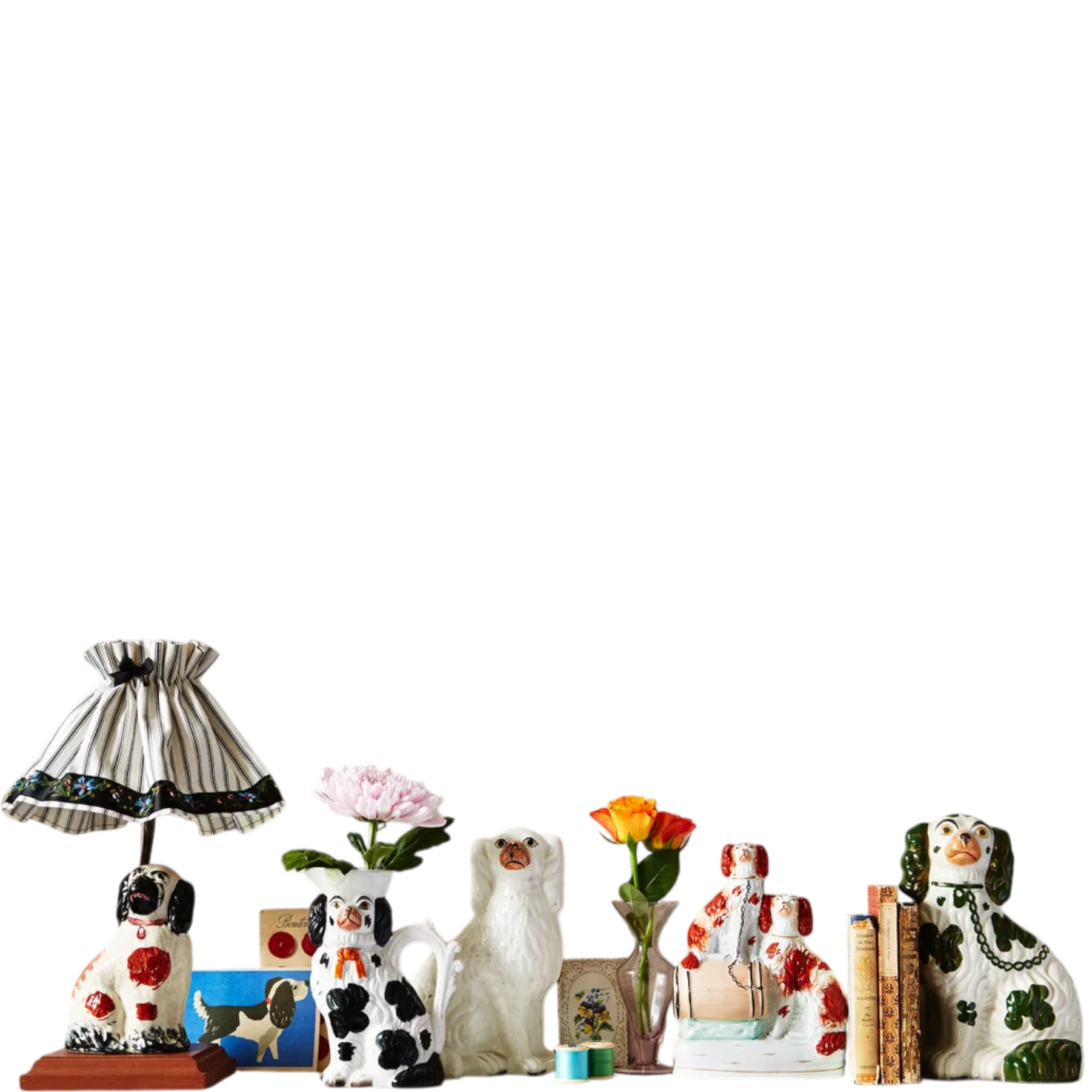
Staffordshire spaniels are an odd breed of antique. As far as dogs go, they neither snuggle nor bark; and as far as antiques go, they have no real household use. So what accounts for their enduring popularity? 
The story of the Staffordshire spaniel figurine is tied to the history of what was to become the living, frolicking Cavalier King Charles Spaniel.
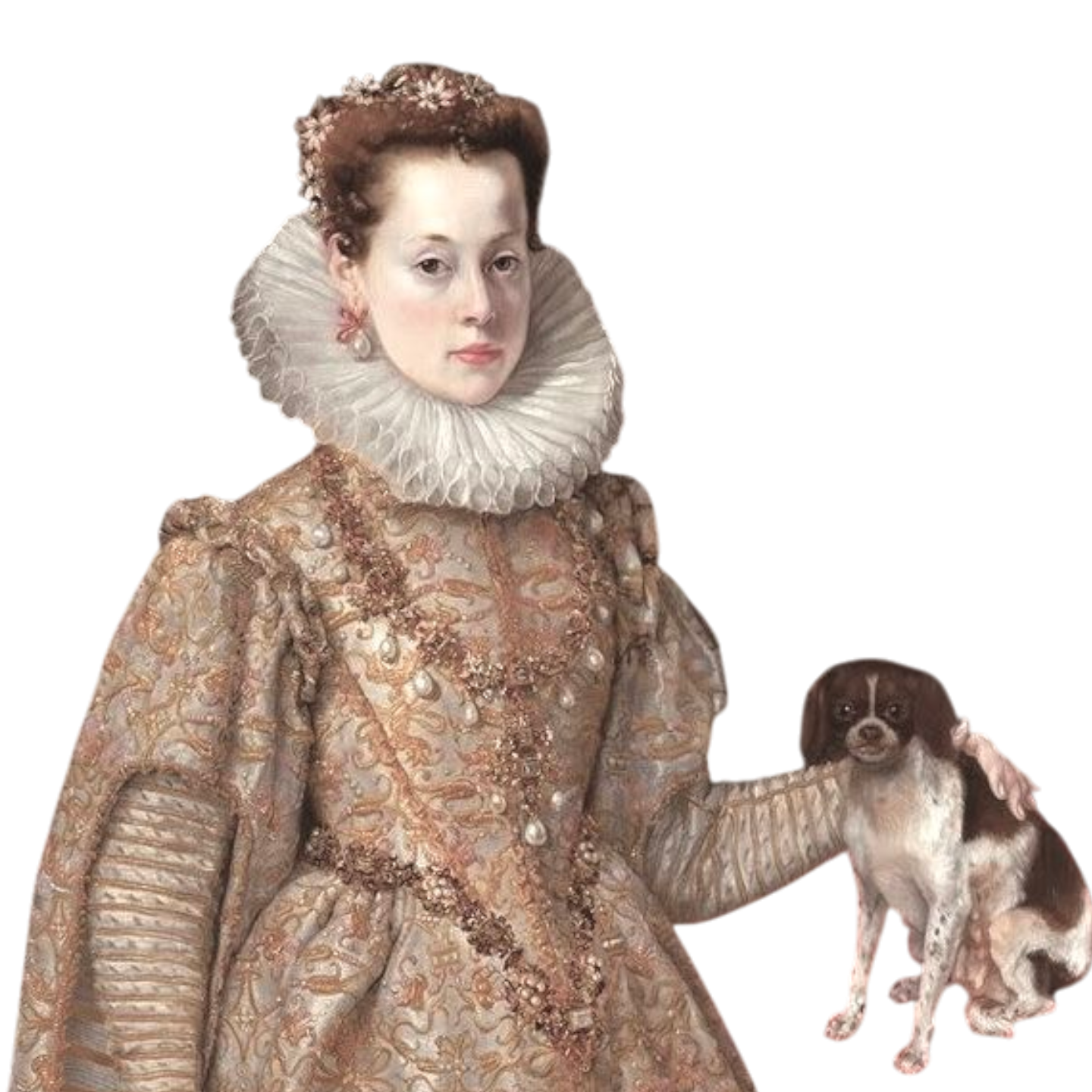
During the Renaissance, these gentle, comforting little dogs were called Spaniells Gentle or Comforter Spaniels. Court ladies his them under their voluminous skirts to keep their legs warm in the cold halls of the castles.
Tragically and poignantly, legend has it that a small black and white spaniel was found in the skirts of Mary Queen of Scots (1542-1582) after she was beheaded.

Although by and large, aristocratic men preferred larger hunting dogs, they, too, were known to indulge in the comforts of small canine companionship.
King Charles I's great love of little spaniels was inherited by his son, King Charles II, here shown as a child (left) with James II and Mary, the Princess Royal, in a portrait by Anthony Van Dyke.

Following his father's execution, the "Cavalier King" Charles II survived exile during the English Civil War, regained the throne with the dramatic Stuart Restoration, presided over the rebuilding of London after the Great Fire, expanded England’s naval power, and transformed his court into one of the most glittering and culturally influential in Europe...all with little spaniels trotting after him throughout the palace.
His legacy is the Cavalier King Charles Spaniel (close to those shown), and the King Charles Spaniel (shorter snout, closer to the English Toy Spaniel).

Even Louis XIV—the self-proclaimed "Sun God" who achieved near-absolute consolidation of monarchical power in France, emerged victorious in the Franco-Dutch War and the War of Devolution, constructed the incomparable Palace of Versailles and its vast gardens as the symbolic center of Europe, expanded France into the dominant military and cultural power on the continent, and transformed kingship itself into an awe-inspiring spectacle of ritual, propaganda, and control...couldn't resist a fluffy little dog.

Queen Victoria’s tricolor spaniel, Dash, sat next to the young queen on the throne, and she had a number of beloved spaniels and other dogs throughout her long life. Court painters such as the renowned Sir Edwin Landseer painted Dash and other noble dogs, and as a result household dogs and in particular the spaniel became a popular motif in paintings and pottery.

Since the 1720s, spaniels (along with other figurines, such as shepherds and princesses, lions and lambs) had been produced by pottery factories in Staffordshire. Thanks to Dash, however, the spaniels enjoyed a siege of popularity in the 1840s which lasted through Victoria’s reign. They became the quintessential Victorian bourgeois status-symbol knick-knack: no mantelpiece was complete without a pair of faithful comforter spaniels standing guard.