Interview No. 2

We caught up with the brilliant and insightful Susannah Carson a few weeks ago and have shared our conversation below.
Susannah, we’re thrilled to have you on our platform and we think there is so much folks can learn from you and your story. Something that matters deeply to us is living a life and leading a career filled with purpose and so let’s start by chatting about how you found your purpose.
There is so much loss and grief in this world, that at times it can darken the skies and stop your heart and take the breath from your lungs. The last thing I want from art is abstraction and alienation. I want to be enchanted. I want to be taken across to magical worlds, or back in time to mysterious histories, or brought close to a loved one again. There are so few moments of joy in this world, that I gather them to me as best I can. I try to create art that makes people happy, but not just on the light and fluffy top note: I try to incorporate a middle note of romance, and a base note of meaning and thoughtful melancholy.
I settled on this search for meaning as my purpose in my teens, when my father was diagnosed with cancer, but I didn’t know how to bring it into being for many years – across studies in philosophy and literature, across continents, and across professions. It wasn’t until I began painting what are known as Lover’s Eyes – tiny miniature eye portraits that were originally part of a social guessing-game jewelry tradition of the Georgian Era – that my efforts connected with an audience and a truly meaningful exchange was born. Whether the eyes are commissioned for loved ones in your family, or imagined from fictional heroines and heroes, the eyes seem to peek from another world and they suggest realms of possibilities. At the opposite end of abstraction, they are romantically realistic; and from the opposite end of alienation, they distill the connection of the intimate gaze and give a sense of belonging.
Over the years, I’ve come to know the people who collect my work as friends. We have all suffered great loss. We are all resilient. We are all determined. We all have romantic hearts and an optimism that cannot be extinguished despite all the challenges we have encountered. It is a wonderful gift they have given me: to connect, to belong, to be able to bring even just a moment of enchantment to other similar souls out there.


Thanks for sharing that. So, before we get any further into our conversation, can you tell our readers a bit about yourself and what you’re working on?
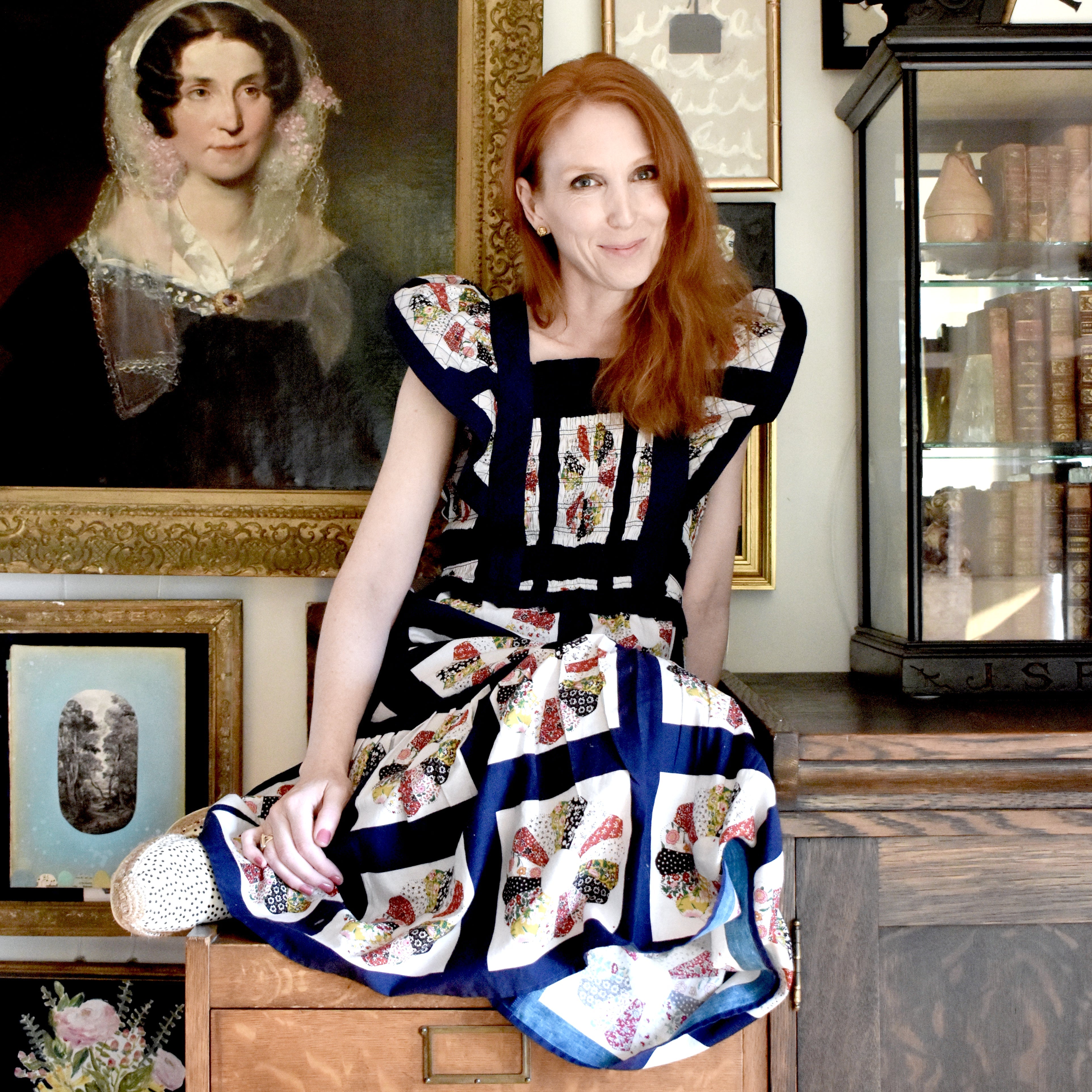
I’m an artist, writer, and editor based in Napa Valley. Before painting became my principal work, I earned a Ph.D. in French literature at Yale and edited the essay collections Why We Read Jane Austen and Living with Shakespeare. That literary world is still very much present in my paintings: in their characters, their references, and the sense that there is always another story just beyond the frame.
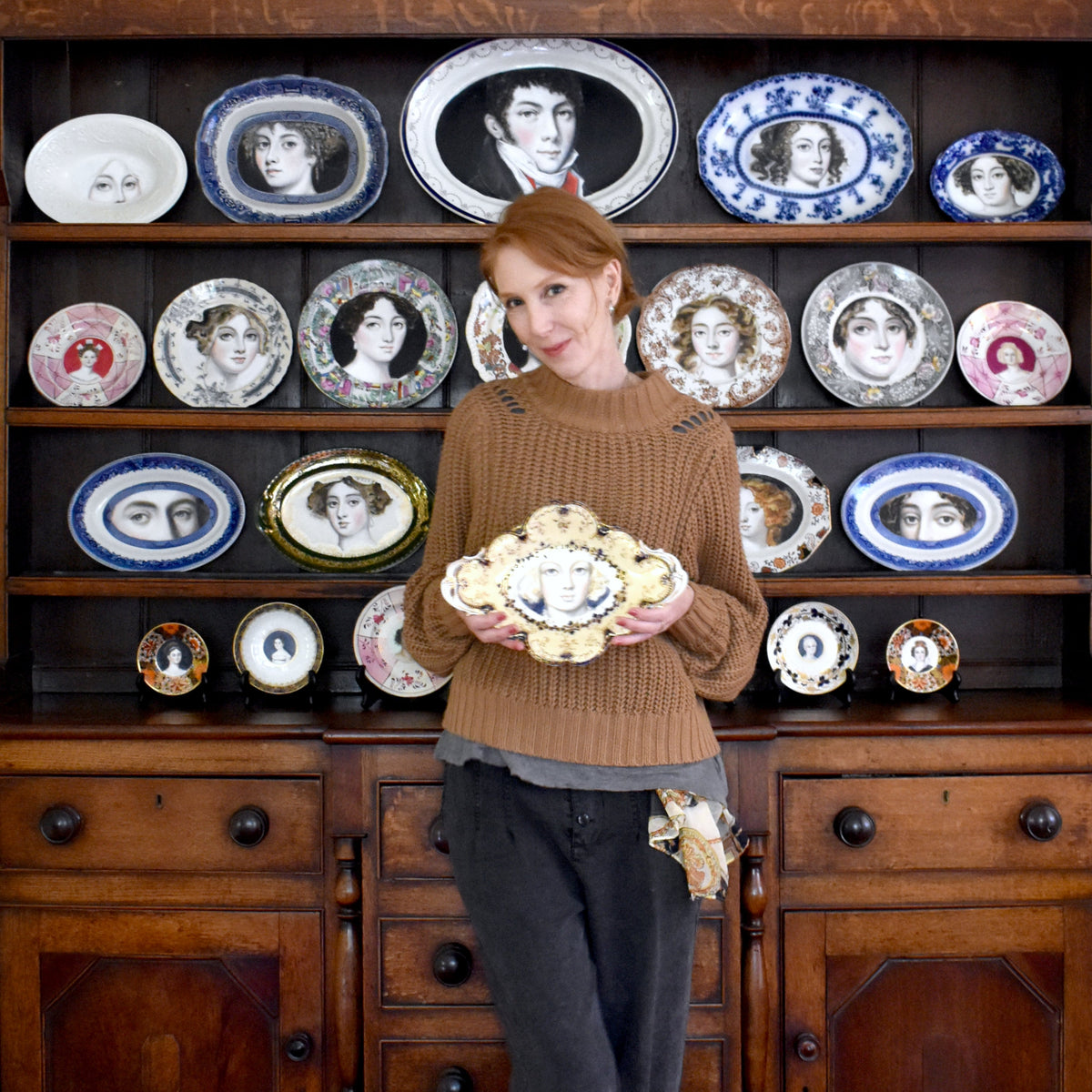
I’m best known for my Lover’s Eyes, which I paint on antique porcelain, vintage silverplate, and jewelry. Finding the objects is part of the pleasure. I’m drawn to elaborate borders, unusual shapes, and evidence of a previous life. Each piece presents its own possibilities: the painting has to belong to the object, as though the two have been waiting to find each other.
Alongside the eyes, I make paintings, prints, and decorative objects. I like the idea of art inhabiting a home at different scales: a large painting that gives a room its character, or a tiny painted charm that accompanies you through the day. My aesthetic is romantic, historically minded, and occasionally rather eccentric. I want the pieces to be beautiful, but also to have personality.
Recently, I’ve been painting larger, more elaborate Lover’s Eyes on vintage silverplate, whose extravagant frames invite something a little bolder. My work has also found new audiences through the Frick’s museum shop, Anthropologie’s collaboration with Artfully Walls, and inclusion in Phaidon’s The Jewelry Book.


If you had to pick three qualities that are most important to develop, which three would you say matter most?
1. There’s no substitute for an education. There’s no replacement for knowing your topic, your history, your materials, and yourself. That education needn’t be formal, but it should be serious and ongoing. Read widely, look closely, experiment with your materials, and learn to recognize why something moves you.
2. All my favorite contemporary art is grounded in historical reference and made relevant through the artist’s unique experiences and perspective. We don’t need to be radically new: we just need to be radically ourselves.
3. Art is more than covering a wall: it’s creating meaning and belonging in a difficult world. Think about what you want your work to give someone, and listen when people tell you what it means to them. Those exchanges can help you understand the value of what you’re making, and give you the courage to keep going.


How can folks who want to work with you connect?
Yes. I’m especially interested in collaborations with galleries, shops, interior designers, and jewelry designers whose sensibilities overlap with mine: romantic, historically curious, and open to a little eccentricity.
The most exciting collaborations begin with a shared fascination and grow into something neither person would have imagined alone. If that sounds like your sort of adventure, please get in touch through my website, susannahcarson.com, or find me on Instagram at @susannahcarson.
Contact Info:
- Website: https://www.susannahcarson.com
- Instagram: @susannah.carson
- Facebook: https://www.facebook.com/SusannahCarsonFineArt/