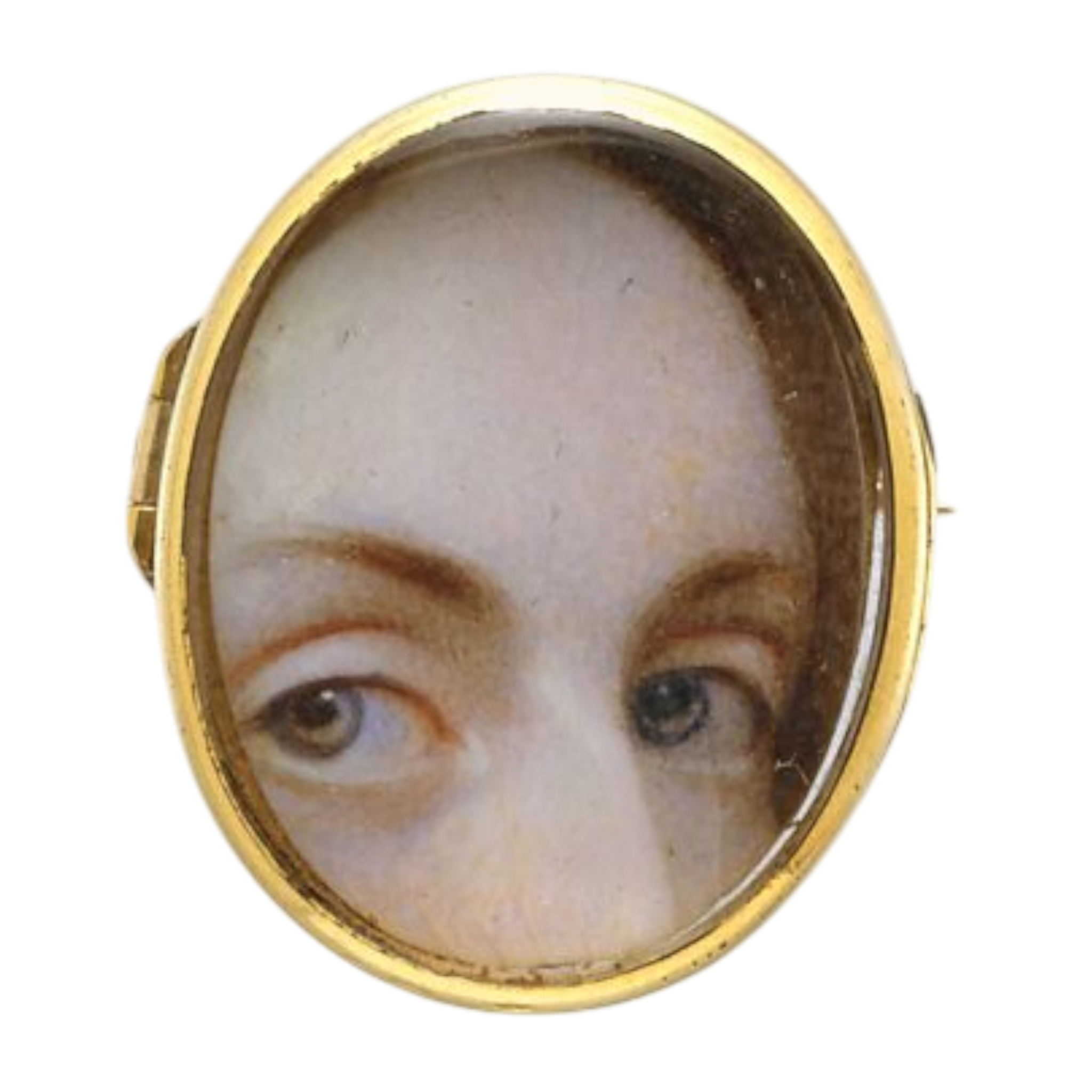
The Language of Lover's Eyes
Georgians and Victorian were fluent in not only the Language of Flowers (e.g., red flowers mean love whereas yellow flowers mean friendship, and mixing them up will get you in trouble every time), but also the Language of Gemstones. There are three main dialects:
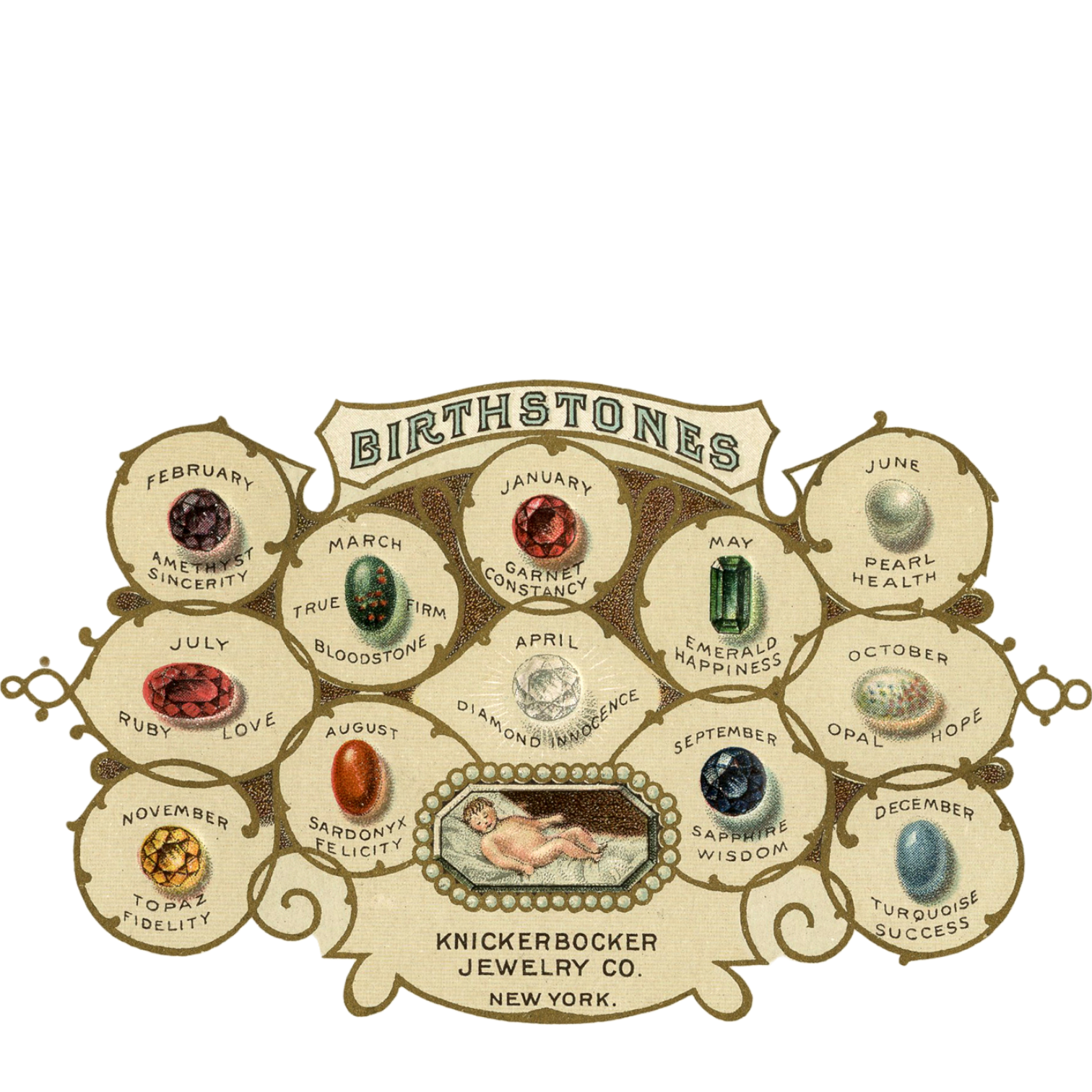
- Birthstones. To this day, we give special meaning to the stone associated with the month of our birth, even though the pairings have been rather randomly assigned. A variation on this is the Zodiac astrological birthstone chart.

- Acrostics. This is the spelling out of initials, a name, or sentimental words such as "Dearest," "Regards", and "Love" using the first initial of the stone to represent the letter (e.g., "D" for diamond, "G" for garnet). See if you can figure out what this ring spells:

- Historical Sentimental Associations. The following is a guide to these (summarized from an essay by Graham C. Boettcher in Lover’s Eyes, p. 39ff).
Pearls: purity, innocence, humility, tears

Diamonds: innocence, life, joy, strength, constancy

Coral: repels misfortune, harm, evil eye

Garnet: felicity, constancy, friendship

Turquoise (rare and expensive): true riches, changes color according to health

Amethyst: faith, protection, sincerity, trust unto death

Topaz: faithfulness, friendship, prevents melancholy, love

Onyx, Whitby jet, French jet: love beyond death

Of course, the Georgians and Victorians loved layered symbolism and complex sentimental symbolism. In addition to combining Lover's Eyes with hairwork, they incorporated other elements as well.
Mixed Stones

The Ouroboros (snake eating it's own tail, but sometimes just a snake): eternity, endless love

Teardrops: mourning

Clouds, curtains, tombstones, angels: memento mori, love beyond death

The Language of Flowers