
The Mystery of Lover's Eyes
Although miniature portraits have existed roughly since portraits themselves have existed, miniature portraits of loved ones enjoyed particular popularity from the Renaissance onward, and were used as introductions, gifts, and mementos.

They play an important role, for instance, in the novel commonly claimed to be the first novel of the modern era, Madame de Lafayette’s La Princesse de Clèves (1678): in one scene, the besotted rake, the Duc de Nemours, slyly pockets a miniature of the Princesse, who is likewise smitten with him but is determined to remain virtuous; she witnesses the theft but can accuse him neither publicly (everyone at court would suspect her) nor privately (he would declare his love). As a result, the Duc then has not only a portrait he can take with him everywhere, gaze at, speak to, weep over, and so on; but he knows she knows he took the portrait, thereby making her complicit; and her husband eventually knows she knows, and the whole turns into a subtle, delicate, and dangerous web of restraint, guilt, desire, and possession.

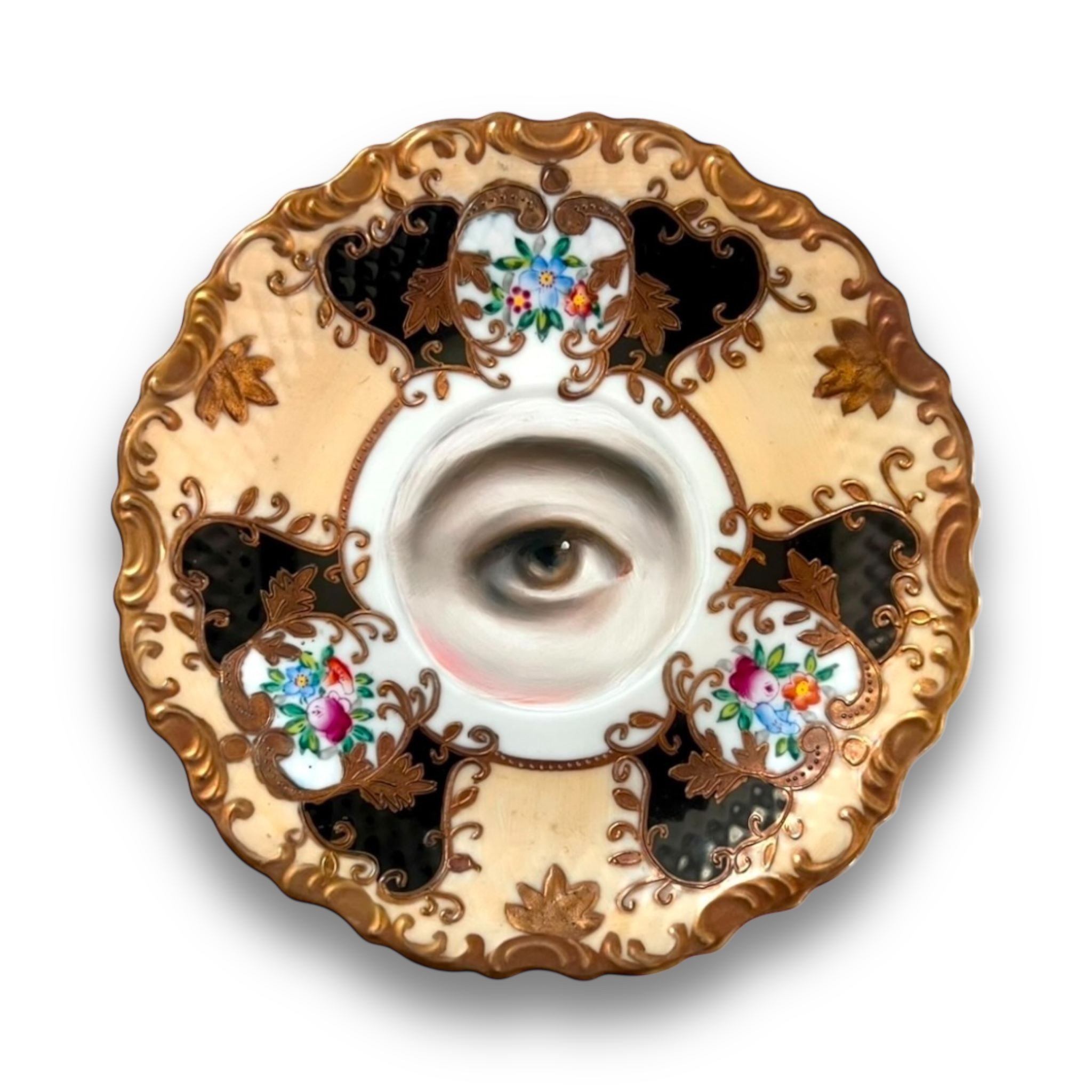
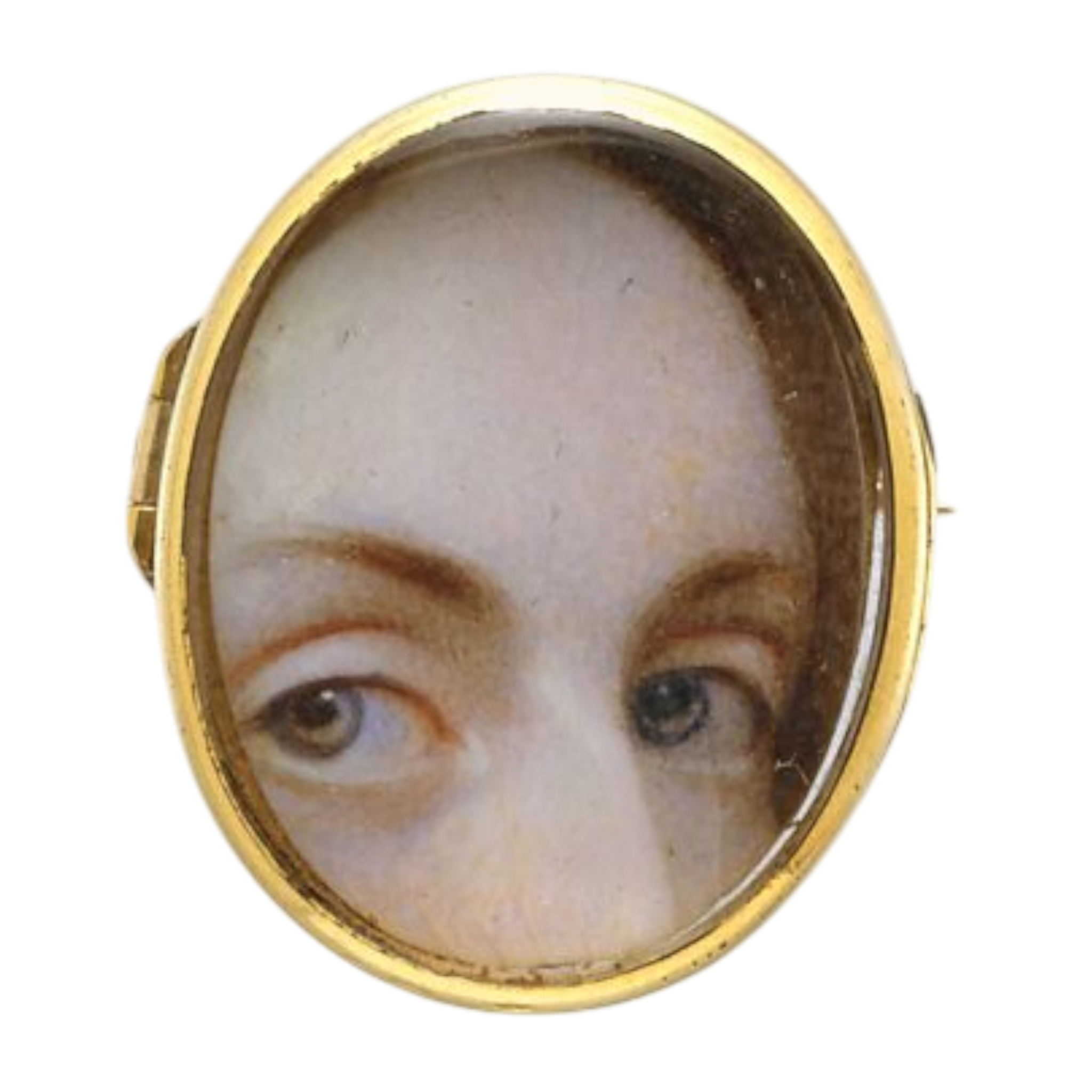
If miniature portraits were complicated with their symbolism, sentimentalism, and synecdoche, Lover’s Eye portraits were even more so. By cropping the portrait to a single eye, a few things happened.
First, the portrait ceased to be easily identifiable: only the beloved or those who were otherwise close to the beloved would know his or her identity. The portrait was less a public, factual, accessible depiction and more a private, intimate, shared secret. If a Lover’s Eye was displayed, it was a bit of a social tease: here’s a portrait of someone, but you don’t know of whom.

Second, by framing the eye – a point made in great detail by Hanneke Grootenboer in Treasuring the Gaze – the object becomes a subject looking out at the subject. In simpler words: are we looking at the painting, or is the painting looking at us? Most of the Lover’s Eyes are gazing out directly at the viewer (these, she says, are 1st-person “I” eyes), although a few are three-quarter or in profile (the 3rd-person “he” or “she” eyes). When comparing the two, you can fully feel the impact of the direct lover’s eye, engaging you in a way that’s somehow beyond what’s possible in a typical painting.


Third, of course, is that painting an eye – just an eye – and encasing it in jewels is extravagant, whimsical, and somehow extremely clever and full of wit, playfulness, and joie de vivre.

At the same time, the intensity of a Lover’s Eye painting is undeniable. Looking at one, you can’t help but notice the simplicity, understand that it’s pure artifice, appreciate the technique, and acknowledge that, on the whole, it’s rather silly – and yet nonetheless be sentimentally tricked by the trompe l’oeil and find yourself engaging intimately, beyond words, with whatever timeless soul is residing in the little frame, and wondering what other thoughts it has, and hopes and dreams, and being filled with the warmth of companionship and connection as you feel an inexplicable urge to share your own thoughts and hopes and dreams with a patiently listening and most keenly observing soul. I might be overstating things. But there is a flicker of something deeply human that brightens us from inside when we encounter a Lover’s Eye – whether of a stranger or of a familiar beloved.

This magical quality, coupled with the sacred overtones, gives a certain talismanic quality to Lover’s Eyes worn as jewelry. This is more than the intimate gaze of two lovers connecting from pillow to pillow: this is a gaze that transcends time and reality, and seems to take on the otherworldly powers of the all-seeing eye or the protector eye. Unlike these abstracted powers resident in the different forms, across different cultures, in variations of the evil eye, however, the Lover’s Eye has one foot in this world and one foot in the next.