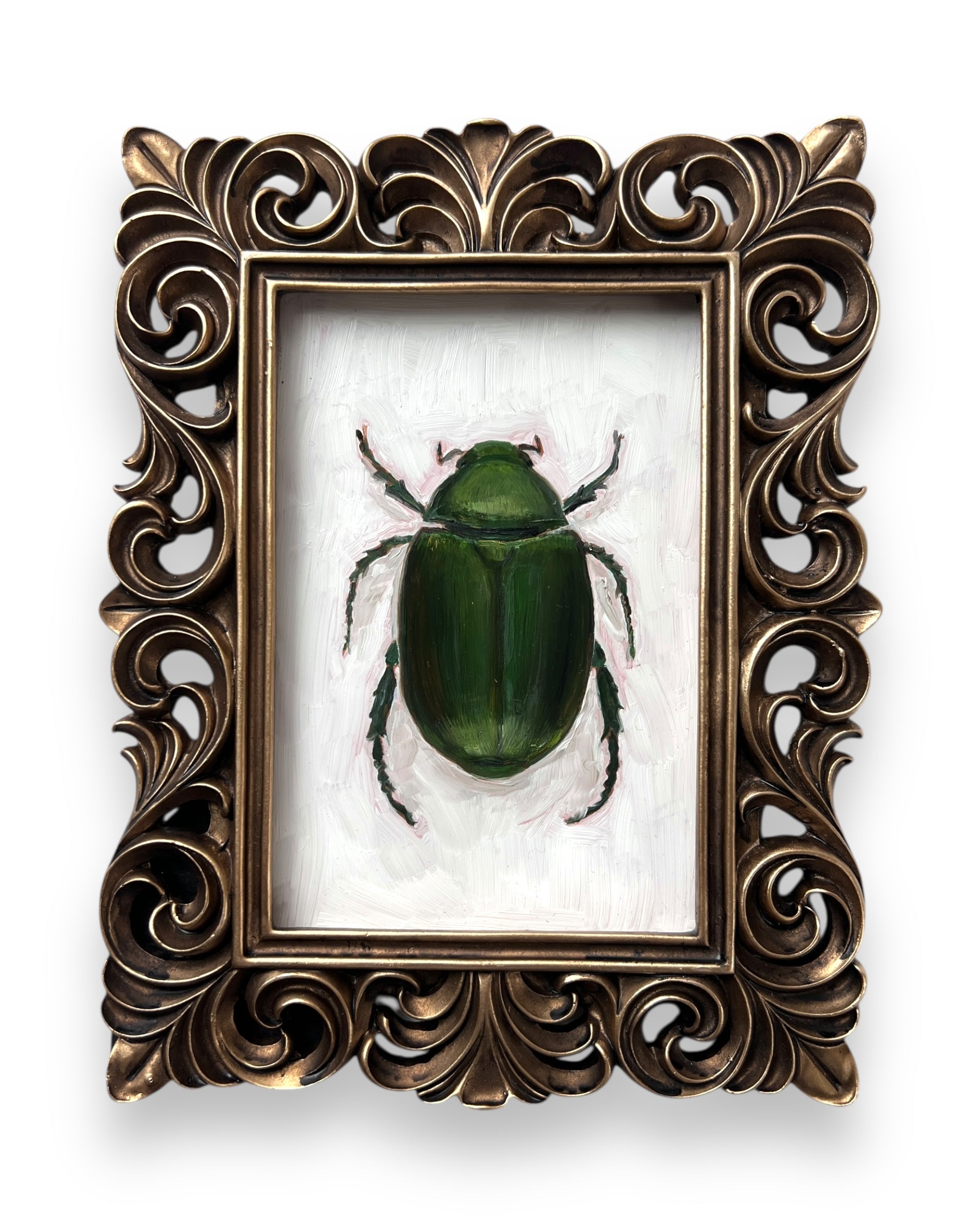
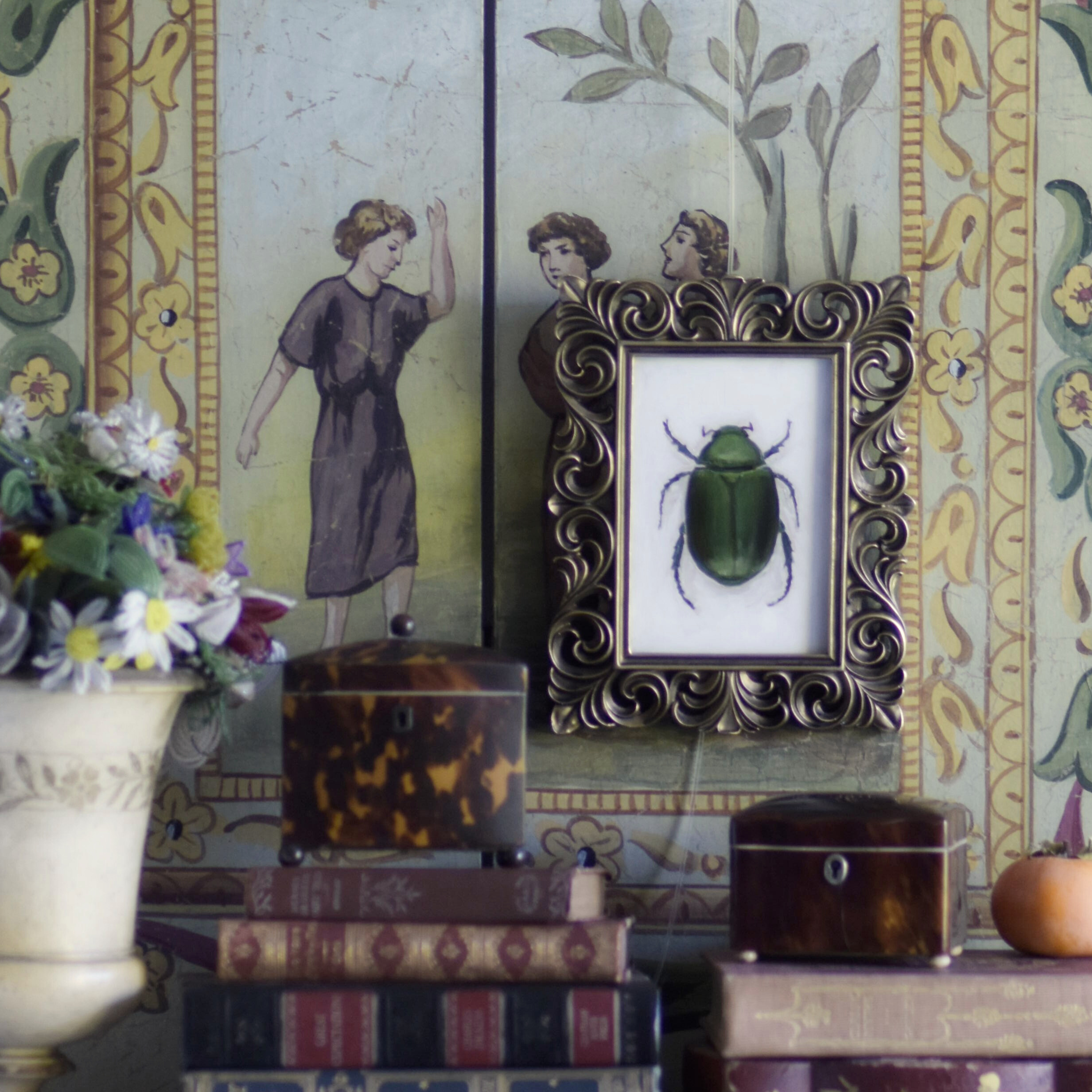
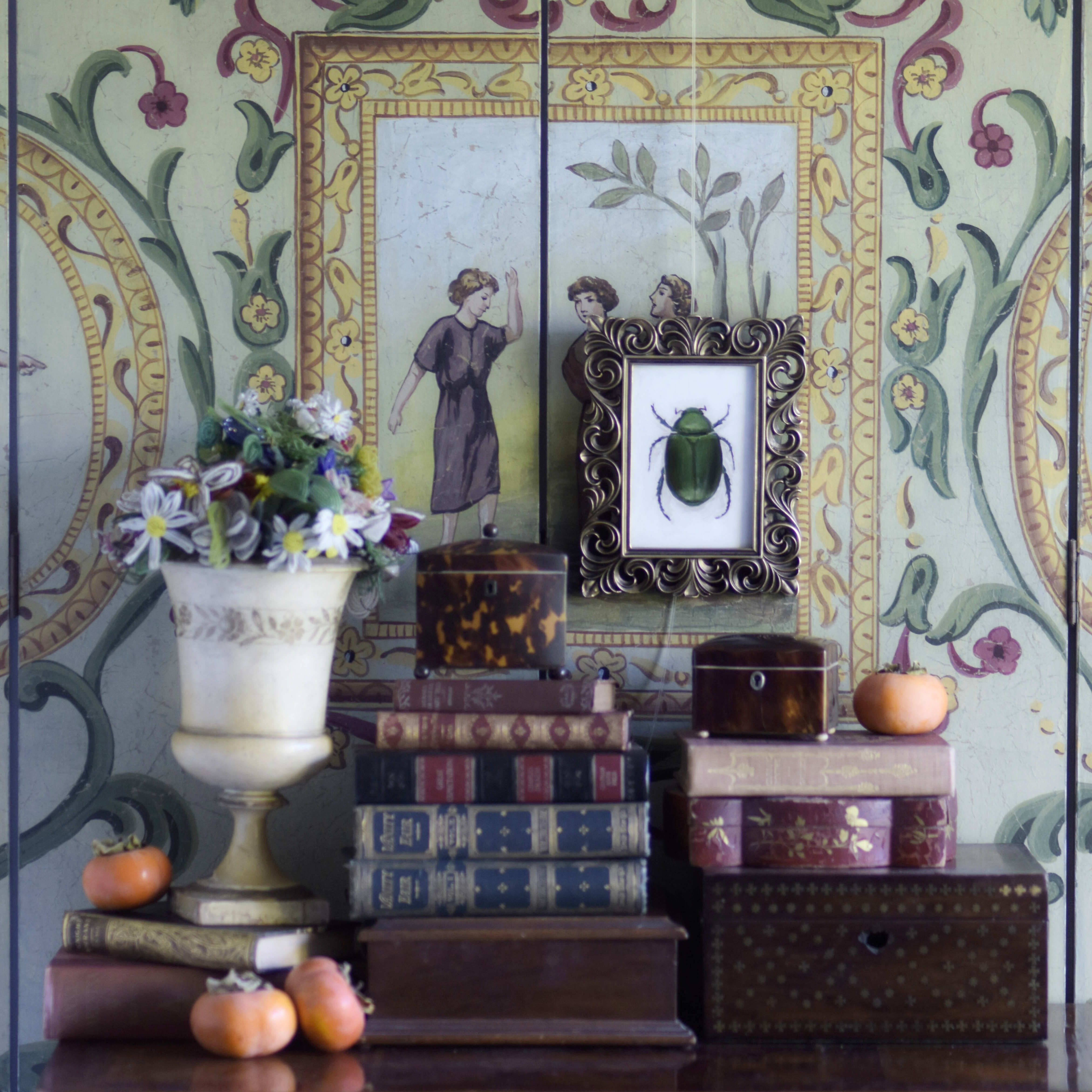
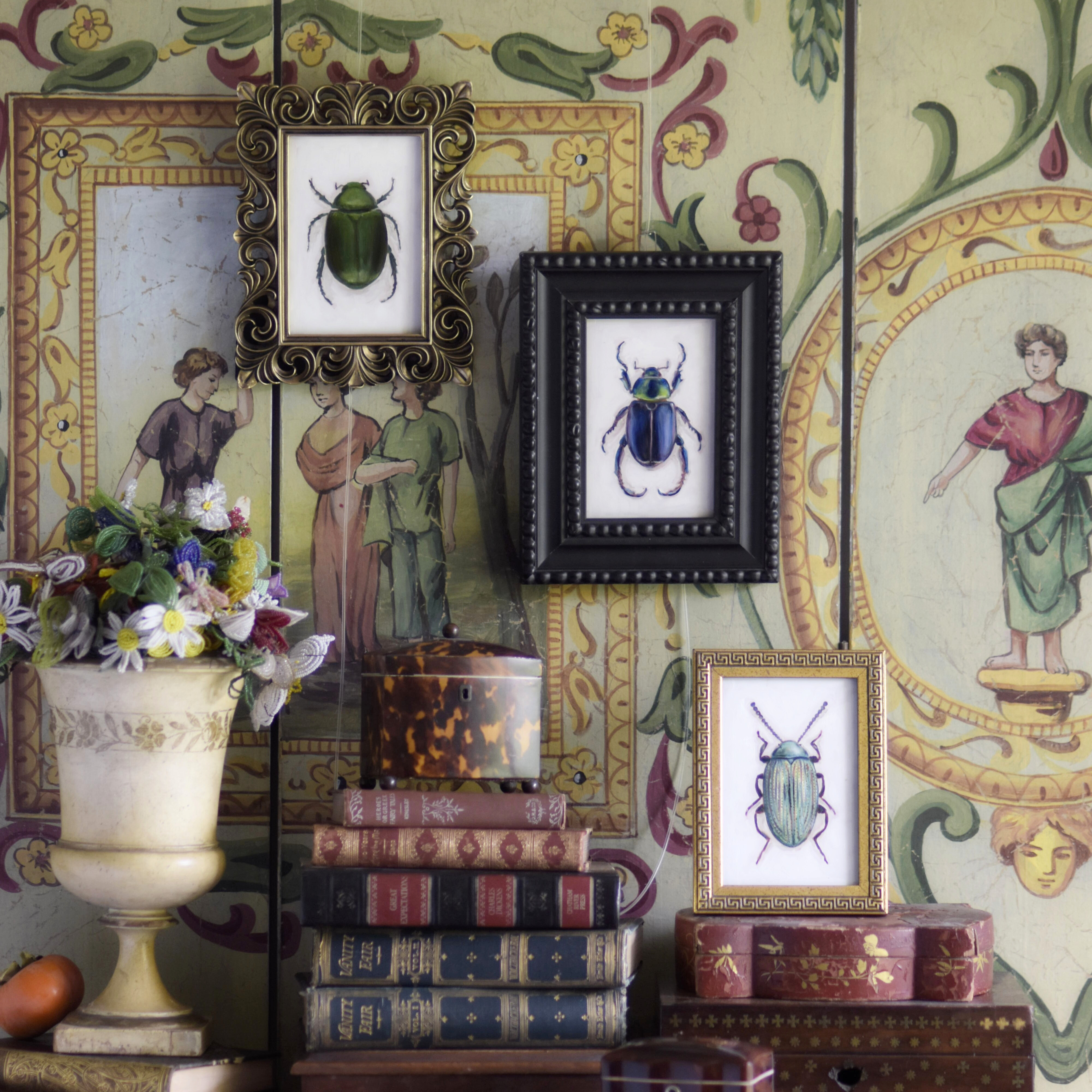
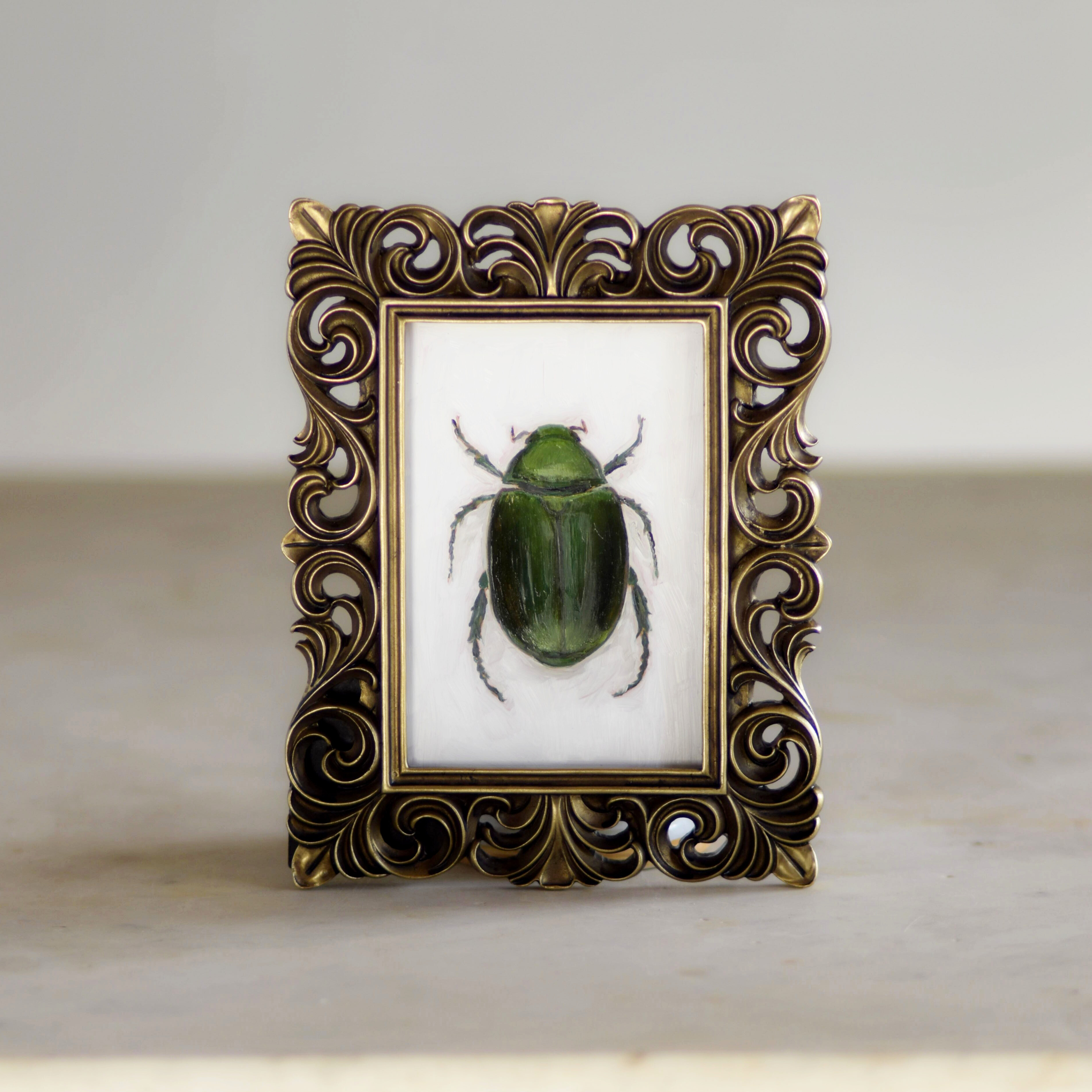
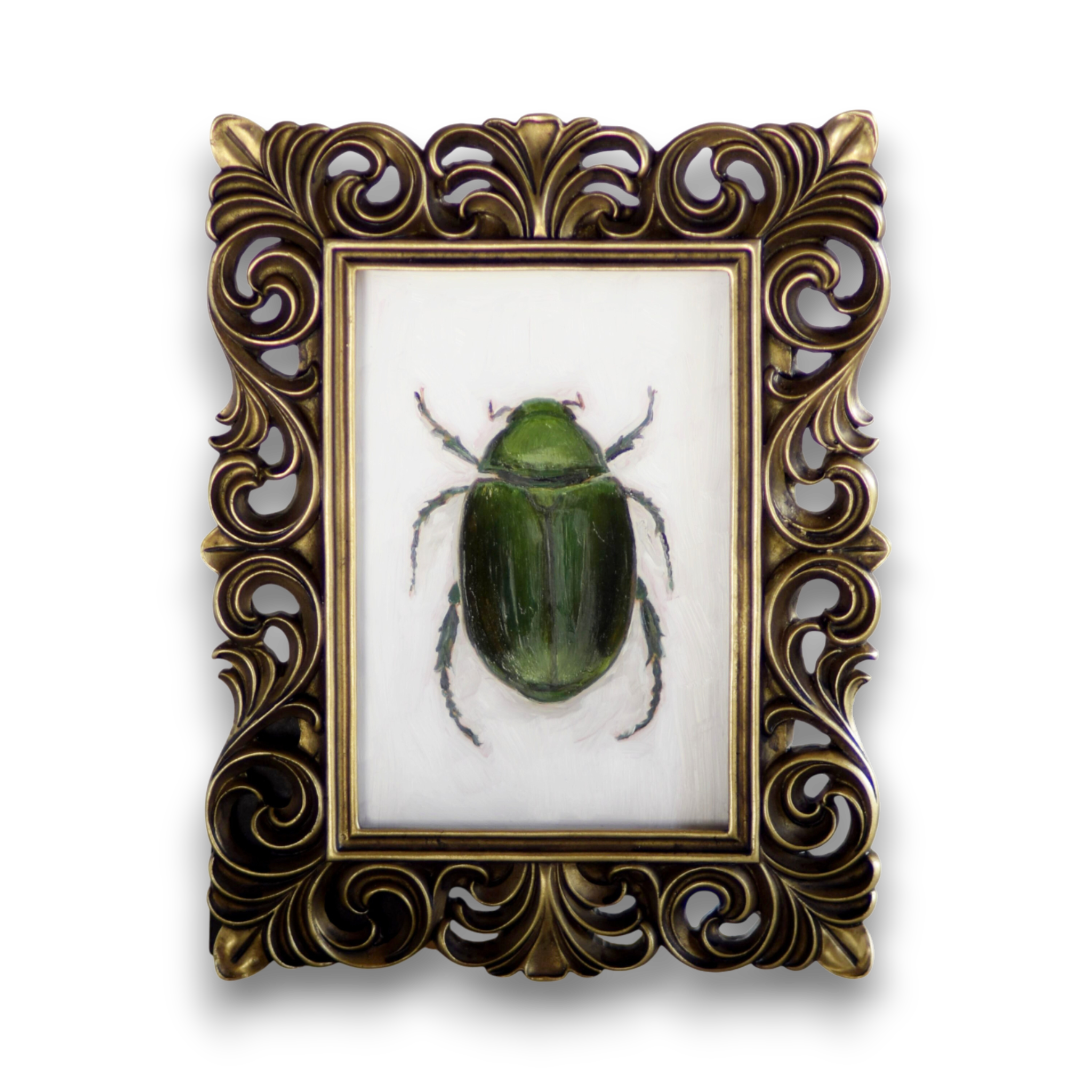
A brilliant green beetle rendered in the meticulous style of Jan van Kessel, recalling the jewel-like studies of 17th-century curiosity cabinets. Elongated wings, shimmering stripes, and fine naturalistic detail evoke the era’s fascination with rare specimens and with turning intimate, scientific miniatures into a precious objets d’art. Oil paints, Venetian turpentine, and walnut oil on copper, in a vintage frame, measuring 6.5" x 8.5".
THE HISTORY: Flemish painter Jan van Kessel (1626-1679) painted meticulous, jewel-like studies of insects, flowers, and shells for 17th-century curiosity cabinets. His purpose was both scientific and aesthetic: to catalog nature’s marvels with precision. Using fine brushwork, luminous glazes, and tiny copper panels, he transformed specimens into exquisitely detailed artworks celebrating the wonder of the natural world.
CURIOSITY CABINETS: Curiosity cabinets, or Wunderkammern, were 16th–17th century collections of rare, marvelous, or exotic objects—natural specimens, artworks, scientific instruments—arranged to display the wonder and diversity of creation. Blending science, art, and status, they served as private microcosms of the world, inspiring early taxonomy and shaping the origins of museums.